
Galerie POPOP
November 9 to December 14, 2026
372 rue ste-Catherine O. Espace 442
Montréal, QC, H3B 1A2
514.393.8248
galeriepopopgallery@outlook.com
https://galeriepopopgallery.com
Exhibitions:
Feedback
Commissaire: Trevor Kiernander
Artistes :
Manuel Bisson
November 9 to November 16, 2026
Ara Osterweil
November 16 to November 23, 2026
Sebastien Worsnip
November 23 to November 30, 2026
Heidi Daehler
November 30 to December 7, 2026
Ben Williamson
December 7 to 14 December, 2026
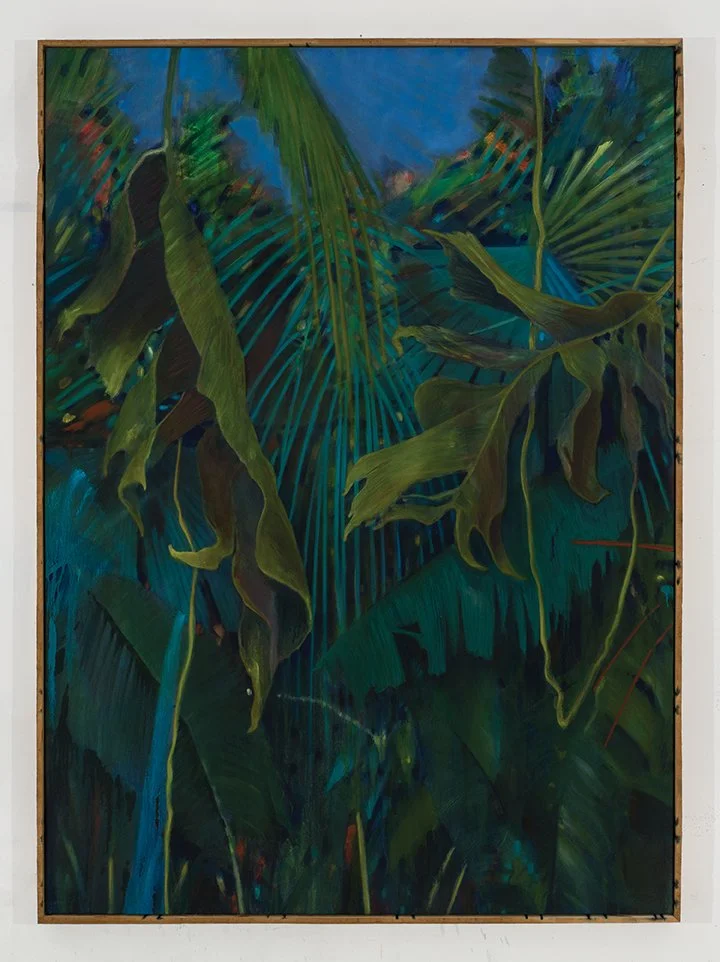
Ben Williamson: Processus de rétablissement / Recovery Process, 2026 huile sur toile avec un châssis en bois de récupération / oil on canvas with recovered wood frame 171 x 125 cm
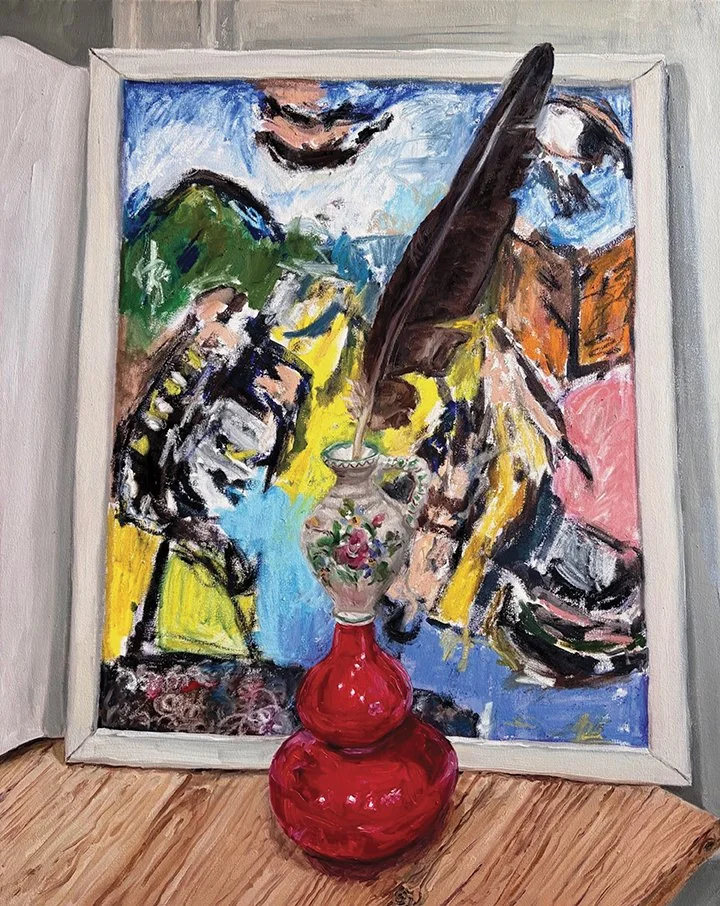
Heidi Daehler: Dans ta nature, 2026 huile, Flashe, acrylique, et bâtons à l'huile sur toile/oil, Flashe, acrylic, and oil stick on canvas 100.3 x 80 cm
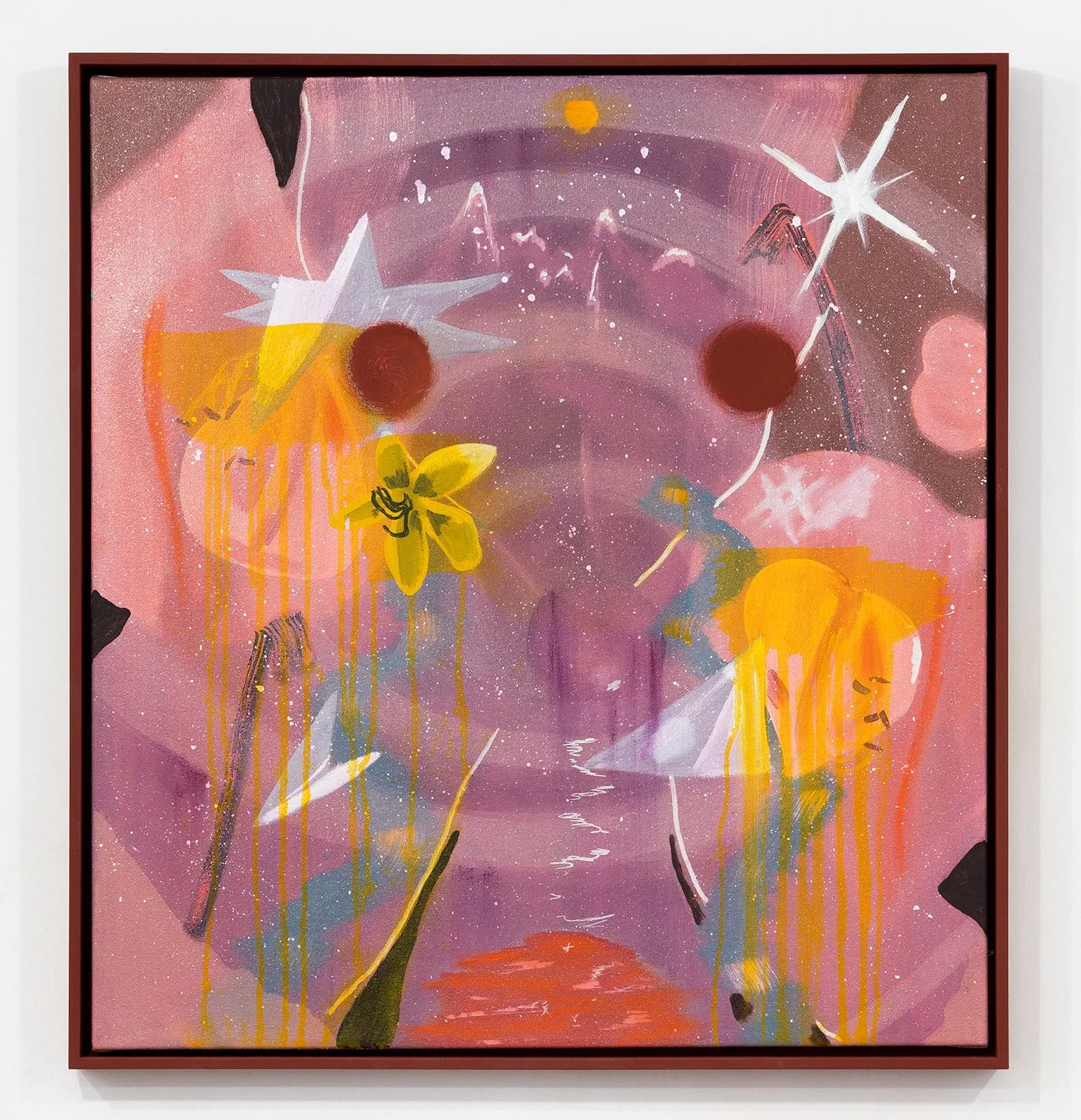
Manuel Bisson: À qui appartient le paysage, 2026 acrylique et huile sur toile / acrylic and oil on canvas 66.04 x 60.96 cm
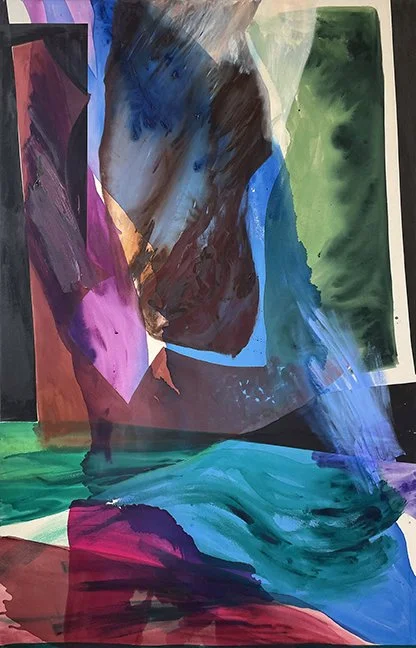
Ara Osterweil: Volta, 2024 acrylique sur toile / acrylic on canvas 213 x 137 cm
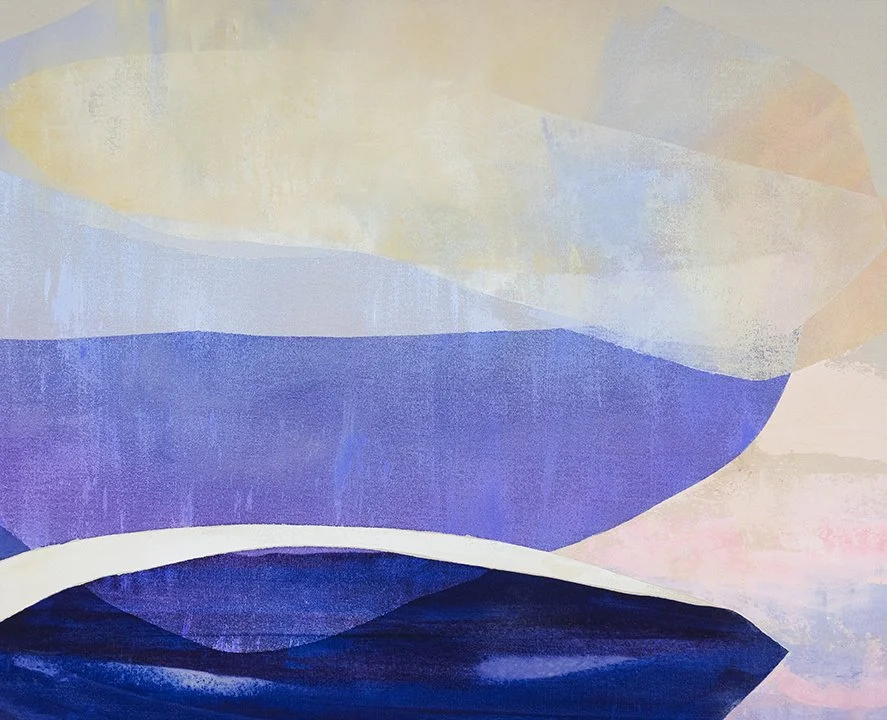
Sebastien Worsnip: Moment Instantané 16, 2024 acrylique sur toile / acrylic on canvas 81 x 100 cm
Feedback forms the final chapter in a trilogy of exhibitions examining common threads in contemporary painting as they occur across different geographic and cultural contexts. Where Echo considered systems of reflection, memory, and residue within painting, and Reverb expanded these concerns through perception, distortion, and the material conditions of viewing, Feedback turns toward a state in which these systems begin to loop, overlap, and destabilize.
In its simplest form, feedback occurs when a signal is fed back into itself. Under controlled conditions, this can produce resonance or harmony; when unchecked, it results in interference, distortion, and collapse. Within the current image landscape—shaped by constant reproduction, algorithmic circulation, and increasingly unstable notions of authorship—feedback has become a defining condition. Images no longer settle. They return altered, fragmented, and often unrecognizable.
The works brought together in Feedback reflect this condition through processes that resist fixity. Systems repeat but do not resolve. Gestures accumulate without hierarchy. Images appear to fold in on themselves, caught between construction and erosion. In some cases, this manifests as density and overload; in others, as interruption, delay, or breakdown. Across these approaches, painting is no longer presented as a stable endpoint, but as something continually in formation, shaped by recursive processes both internal and external.
Feeback provides five exceptional artists the opportunity of a solo exhibition in a professional context, and under the umbrella of Pictura. All artists have been carefully considered and do not have current gallery representation.
Working with banks of found imagery—screenshots, newspaper clippings, video stills, and personal photographs—Ben Williamson constructs paintings that orbit central ideas across serialized bodies of work, where each image feeds into the next. Meaning is not fixed within a single composition, but emerges cumulatively, as fragments of personal and collective memory are reprocessed, recontextualized, and reinvested through repetition. In contrast, Heidi Daehler embraces a more intuitive and associative logic, allowing disparate subjects to coexist without predetermined hierarchy. Figures, objects, and environments drift between recognition and abstraction, guided by touch, material variation, and a willingness to relinquish control—producing images that feel as though they are discovered in the act of making, rather than resolved in advance.
This sense of permeability extends into Manuel Bisson’s paintings, where interior and exterior spaces collapse into one another. Semi-figurative forms, organic patterns, and architectural structures interweave to produce environments that feel both constructed and unstable, as though governed by a logic that is continuously unfolding. In these works, landscape is not represented, but metabolized— emerging as a shifting ecology where memory, emotion, and spatial experience are held in tension. Similarly, Ara Osterweil begins from direct encounters with natural phenomena—landscape, weather, atmosphere—but subjects these impressions to processes of staining, layering, and collage that disrupt any fixed point of origin. Chance becomes structure, and structure, in turn, becomes something provisional, open to continual revision.
While Echo emphasized intimacy through scale and restraint, Feedback revisits this condition under different circumstances. The close encounter with painting is no longer quiet or contemplative, but charged—compressed with information, or conversely, thinned to the point of near-disappearance. What once invited careful looking now demands it, as meaning no longer settles easily on the surface. In Williamson’s work, this tension emerges through image-driven compositions that balance detachment and empathy, capturing moments suspended between fulfillment and expectancy, while in Daehler’s practice, it is embedded in an embodied approach to mark-making, where shifts in medium, surface, and gesture destabilize the image and foreground its making.
The question of scale, present in Echo through a tendency toward intimacy, is unsettled here. In Feedback, scale no longer operates as a fixed attribute, but as a shifting condition. Dense, informationrich surfaces may exist within modest dimensions, while sparse gestures extend into spaces that feel disproportionately vast. What emerges is a continuous oscillation between compression and expansion, where distinctions between detail and totality begin to blur, and the viewer is unable to fully grasp the work from any single position. In Sebastien Worsnip’s paintings, this instability is reinforced through processes of layering and stencilling, where landscapes are translated, fragmented, and reconstituted, suggesting spaces that oscillate between construction and erosion, inertia and transformation.
Materially, these works often operate at the threshold of control. Surfaces may appear overworked or on the verge of collapse; marks double, stutter, or cancel one another out. Elsewhere, a quieter instability emerges, where minimal shifts carry disproportionate weight, and meaning seems to hover without ever fully settling. What unites these practices is a shared sensitivity to how images behave once released into circulation—how they return, accumulate, and transform over time.
If Reverb insisted on the necessity of encountering painting in the flesh, Feedback acknowledges that the viewer is already implicated within these systems. Perception itself becomes part of the loop: the act of looking completes, disrupts, or redirects the work. In this way, painting is understood less as an object to be received, and more as a site of exchange, where image, process, and viewer continuously inform one another.
Rather than offering resolution, Feedback presents a condition of saturation. Signals overlap. Distinctions blur. The closer one looks, the less stable things become. What emerges is not clarity, but a generative instability—one that reflects the complexity of engaging with images today. In this final chapter, painting does not simply echo or persist; it feeds back, fractures, and produces new forms in the process.
by Trevor Kiernander