
Maison de la culture Mercier
October 31, 2026 to December 13, 2026
Cultural Officer: Renée Lebel
8105 rue Hochelaga
Montréal, Québec H1L 2K9
514.872.8755
maison_me@montreal.ca
https://montreal.ca/lieux/maison-de-la-culture-mercier
Exhibition:
The Unspeakable Compromise: Studio 102
Oski Awoyo, Sierra Barber, Camila Carella, Caroline Douville, Laurena Finéus, Janet Jones, Christine Major, Malik McKoy, Florence Viau
Commissaire/Curator: eunice bélidor
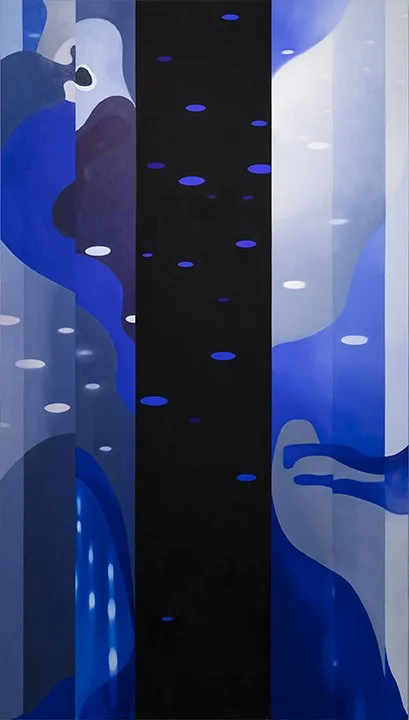
Janet Jones: The Ghosts are Calling, 2020 huile et acrylique gouache sur toile / oil and acrylic gouache on canvas 243.84 x 137.16 cm
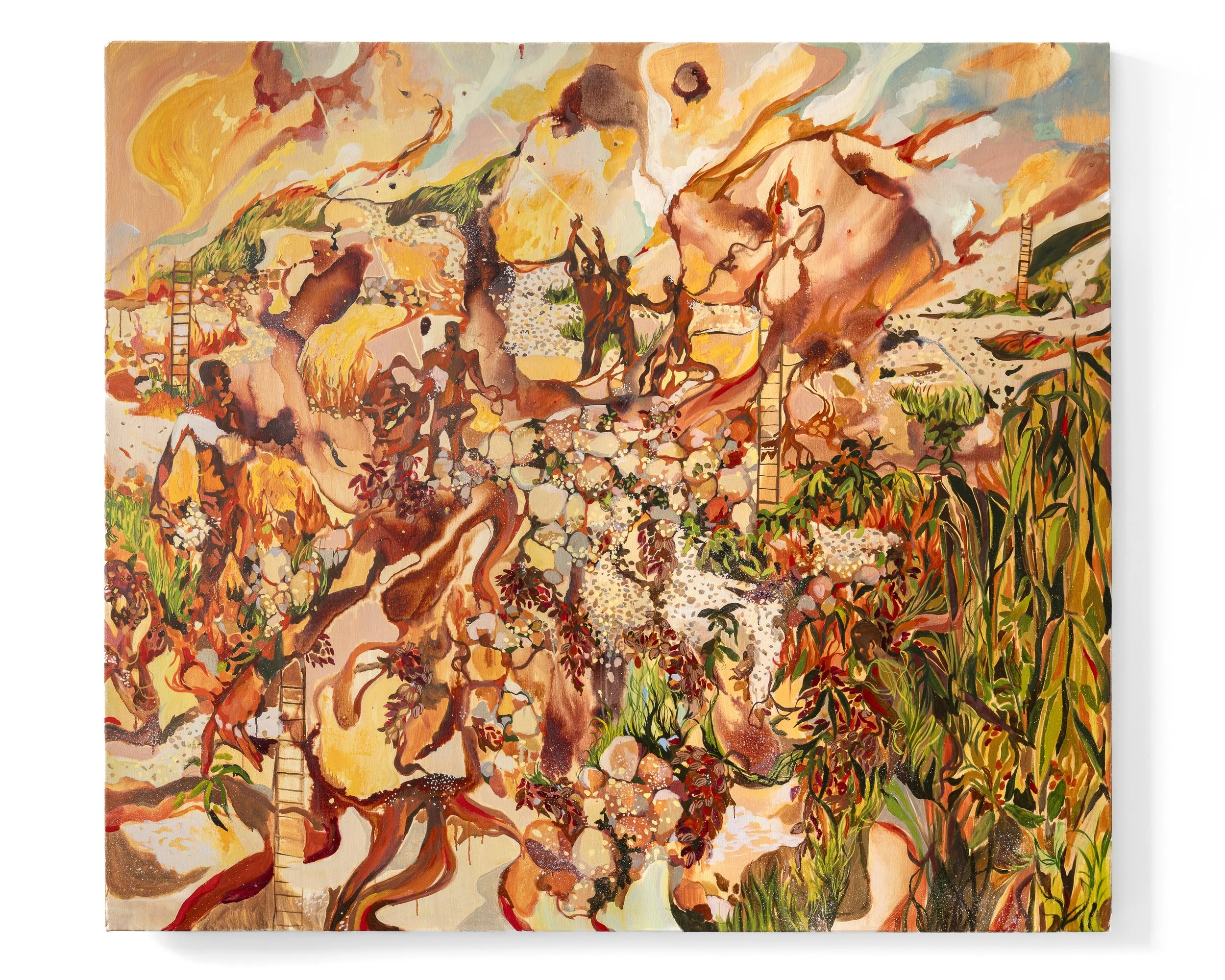
Laurena Finéus: Refugees of a World on Fire, 2025 huile, encre, paillettes de mica, pigment et acrylique sur toile / oil, ink, mica flakes, pigment, and acrylic on canvas 152.4 x 127 cm
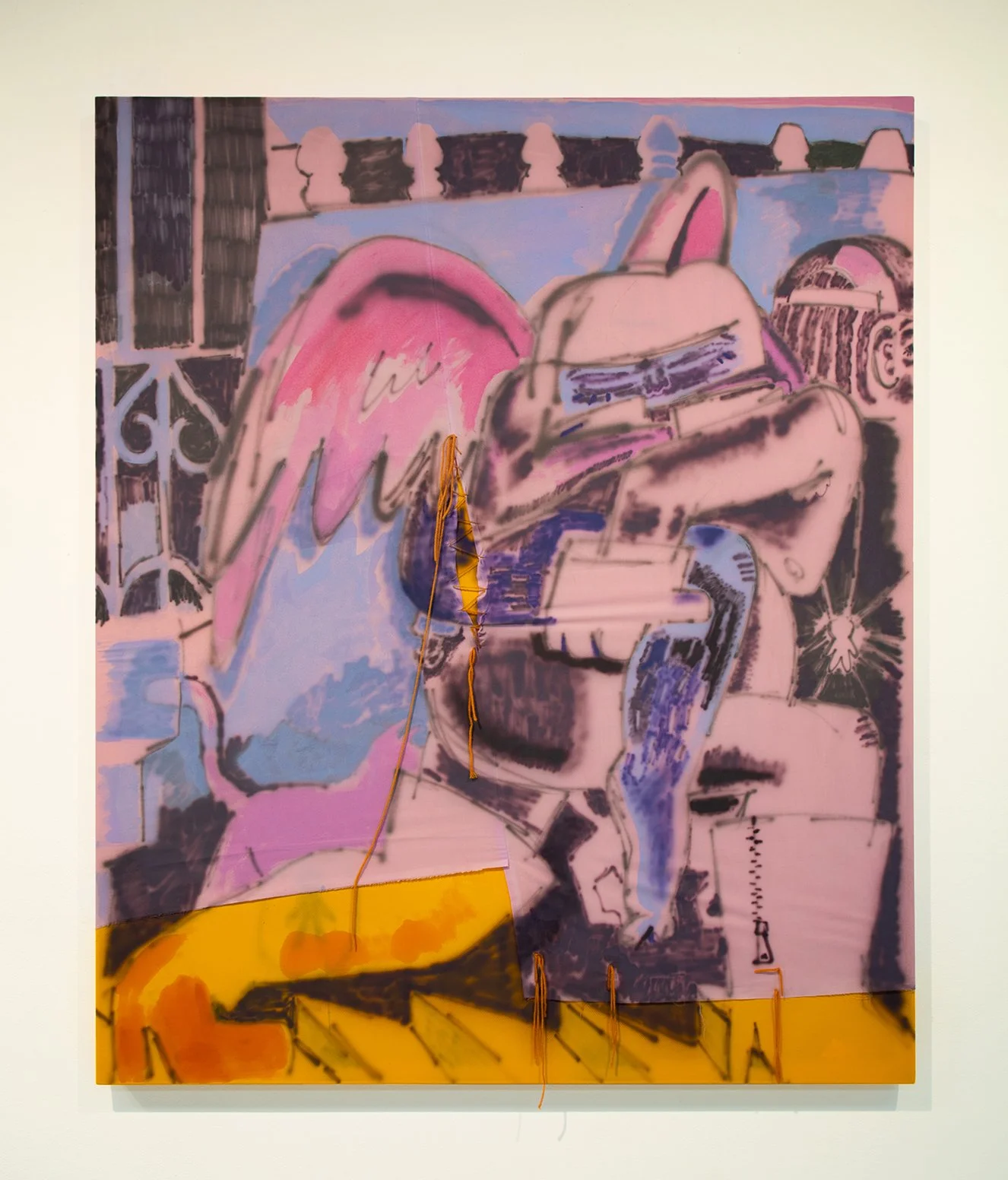
Malik McKoy: going up road, 2026 acrylique sur mélange coton-polyester, fil et maille en polyester / acrylic on a cotton-polyester blend, polyester yarn and knit fabric 40.64 x 50.8 cm
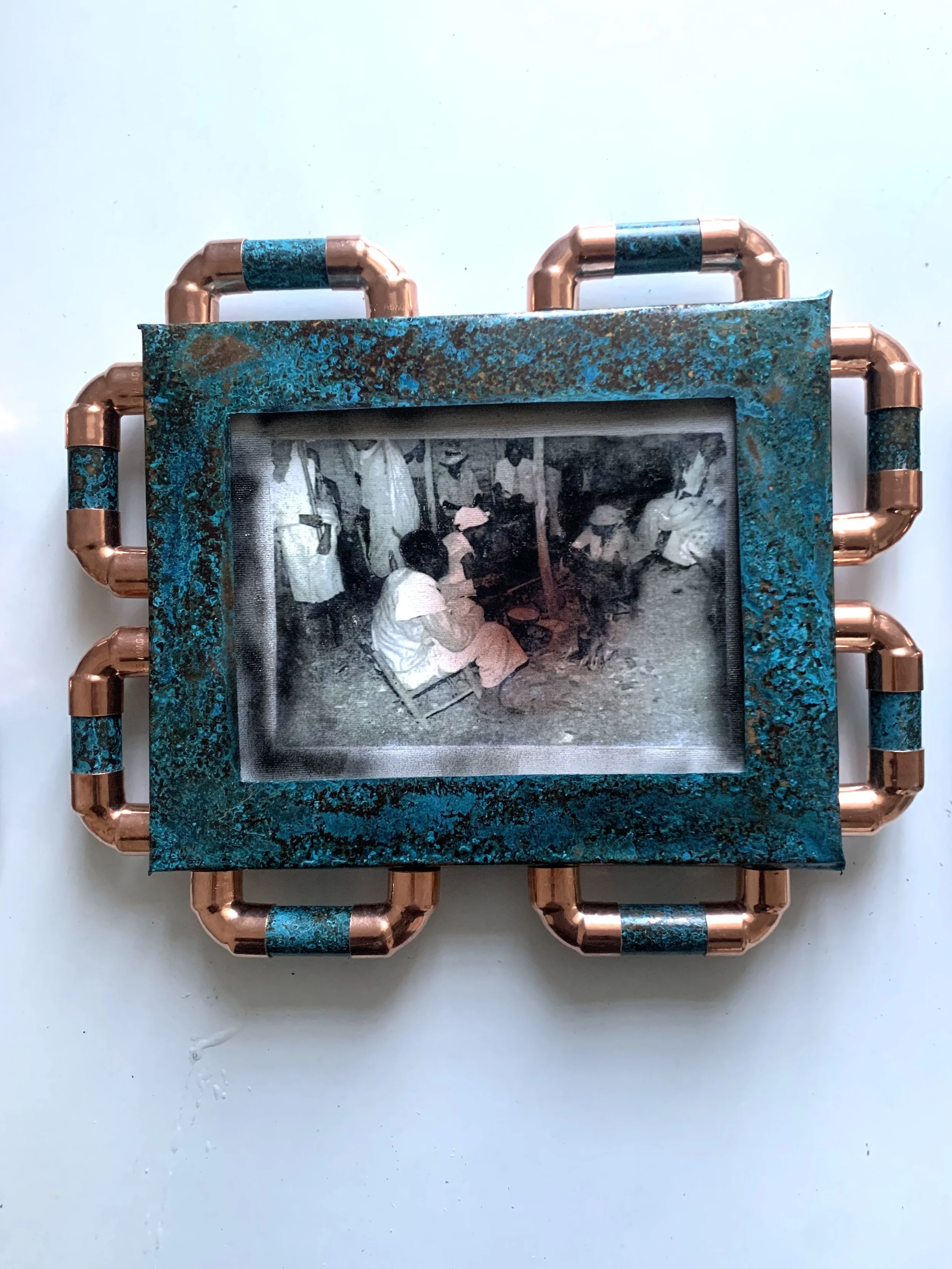
Caroline Douville: Calling the lwas, 2026 acrylique, transfert d'image et cadre en cuivre / acrylic, image transfer, and copper frame 33 x 40 x 4.5 cm
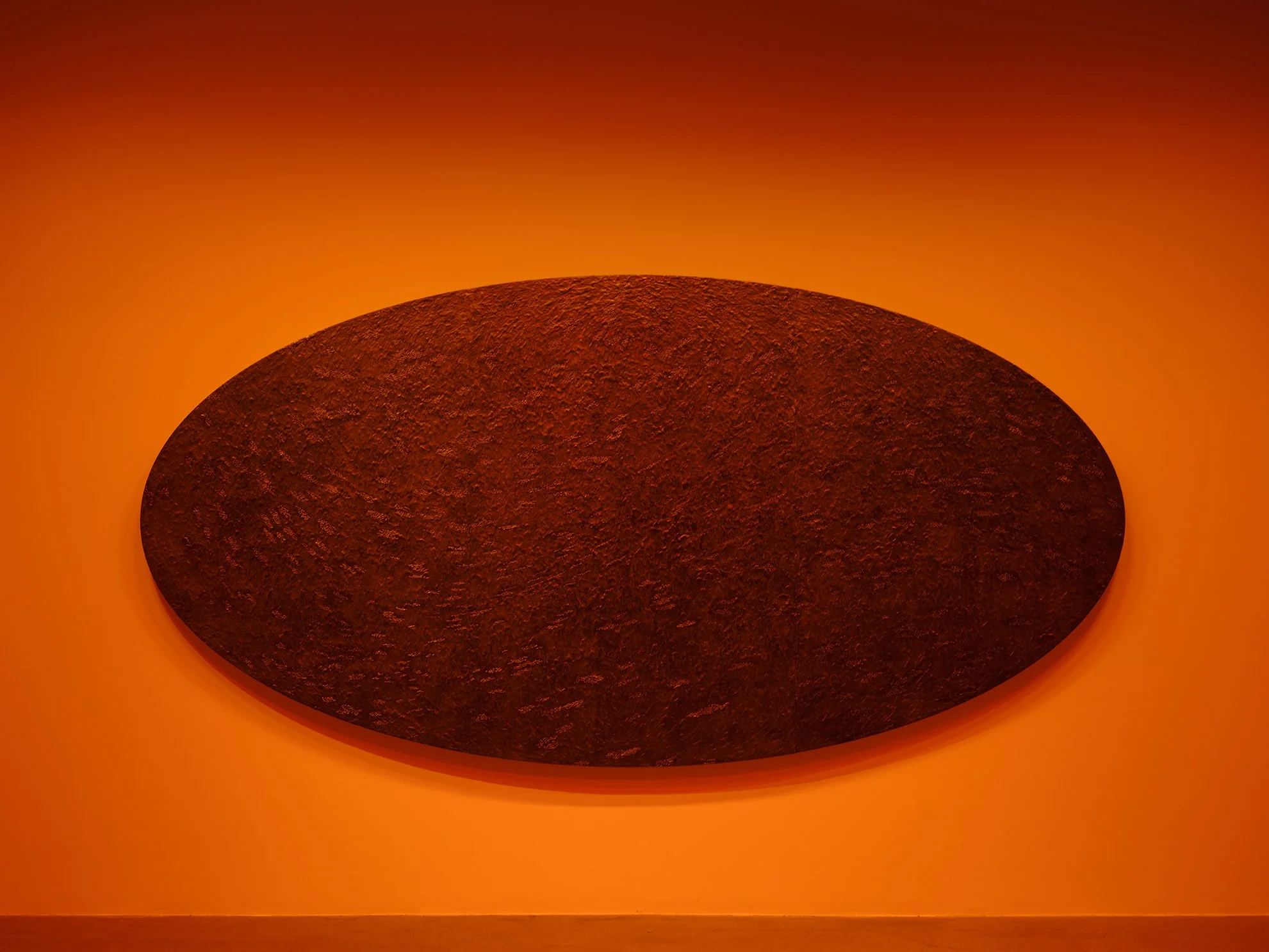
Florence Viau: Première lueur, 2026 argile polymère, pigment graphite, médium et vernis sur panneau de bois polymer clay, graphite pigment, medium, and varnish on wood panel 15.24cm x 29.21cm
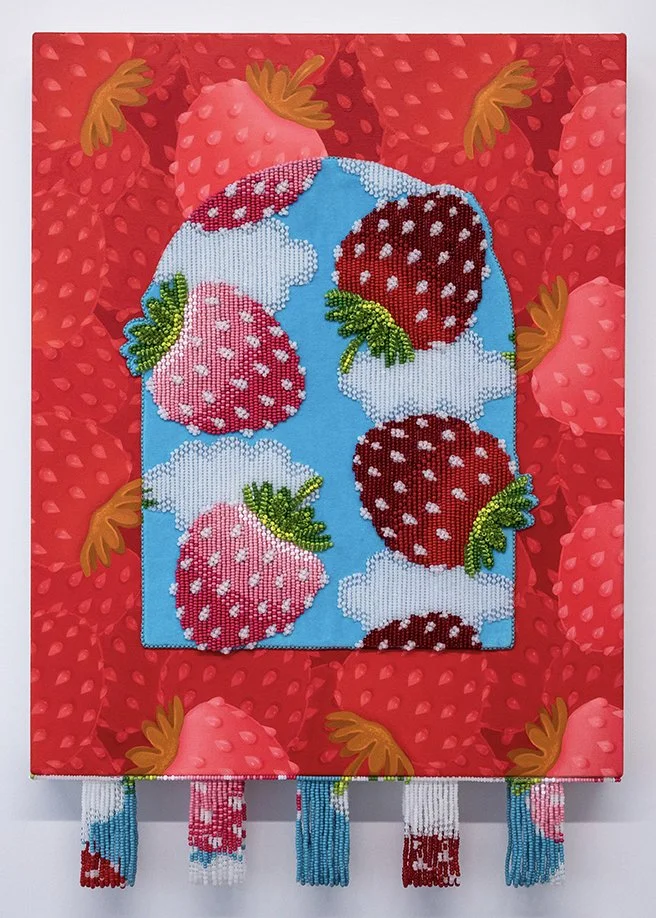
Sierra Barber: berry portal, 2025 perles de rocaille en verre (vintage et contemporaines) sur velours de coton, et ruban / glass seed beads (vintage and contemporary) on cotton velvet and ribbon 40.64 x 50.8 cm
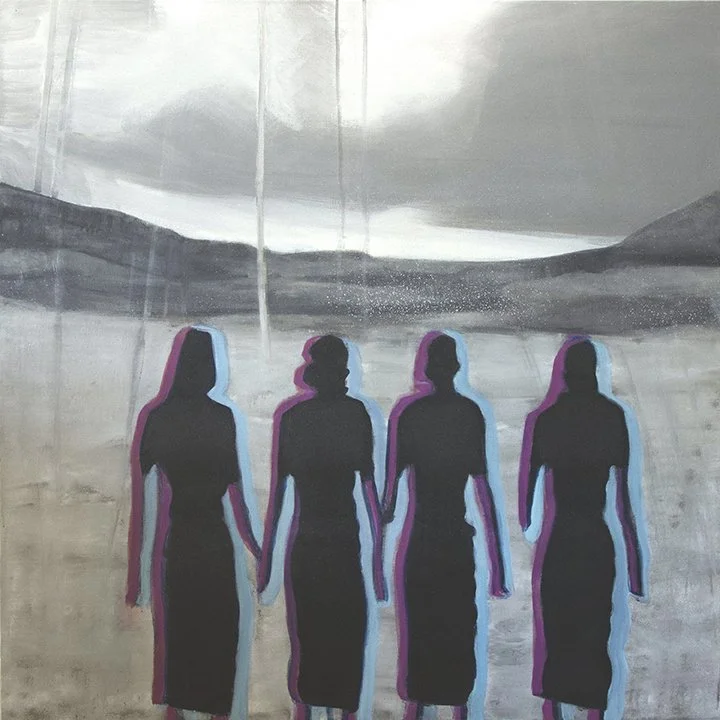
Christine Major: Retranchement 1, 2026 acrylique sur toile / acrylic on canvas 122 x 122 cm
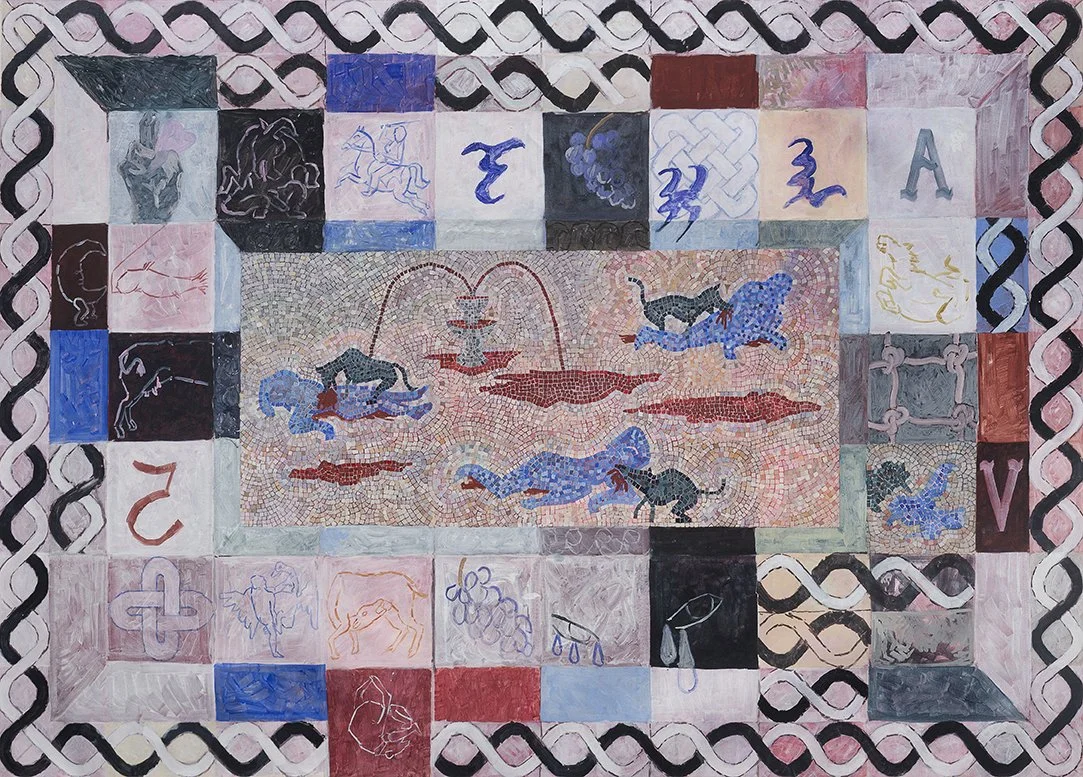
Camila Carella: chacales comen chacales, 2023 huile sur toile / oil on canvas 100 x 150 cm
Studio 102 at the Maison de la Culture Mercier is a different type of experiment. After several studio visits, I realized that the artists presented in this iteration work in contemporary painting, yet create forms that go beyond the canvas. Oski Awoyo’s work is imbued with the colours, rhythms, and energy of his birth country Haiti. The immersive installation I Painted Myself to Death contains years of a life spent in the studio: paintings, objects, and memories form a collection made in the Haitian, DIY tradition of artistic assemblage created out of necessity. Caroline Douville explores the cognitive processes by which members of the diaspora examine their distant identity and connect it to their local base. Also of Haitian origin, Douville incorporates in her paintings frames made of copper and sheet metal, materials widely used for housing in Haiti. Exhibited as an installation, the works of Christine Major envision painting as a space in which images can eschew the logic of recording and have a subtler, more open and relational presence. Although painting shows something to be seen, her works focus on erasure. Working with Major was very important for me: her Rencontre (2003), which represents a studio, was part of the exhibition Views of Within and set the tone for the section on artist studios. We met by chance in May 2022 at York University, where we had been invited to participate in the arts program’s Summer Institute. I was there at the invitation of Michel Daigneault and Janet
Jones who is also part of Studio 102. Jones and I very quickly developed a connection that spring. She was also born in Montreal and took advantage of the nighttime to forge her independence in the early 1970s. When we last saw each other at Flame + Smith, in Bloomfield, Ontario, where she had just moved, she told me with evident excitement how her studio, a prefabricated container made by the Bonneville company in Beloeil, had been transported to her property, and how she had seen it “land” only a few days prior. For Jones, her studio and painting represented a way of remaining independent. We promised to work together and submitted applications for various residencies and projects. Her presence in Pictura is my way of paying homage to our friendship: Jones died in May 2025. Her painting focused on personal experience of contemporary urban spaces and the place of women in these environments. Diverse geographies are also important in Laurena Finéus’s art practice. Through figurative, detailed, and colourful painting, Finéus explores Black geographies, Maroon theory, and migratory histories. In its large, white-cube gallery, the Maison de la Culture Mercier presents works that remind us of painting’s ability to address an eclectic array of themes, histories, and figures through various pictorial gestures and that the studio is an ideal space for relating gestures and affects.
essay excerpt by eunice bélidor